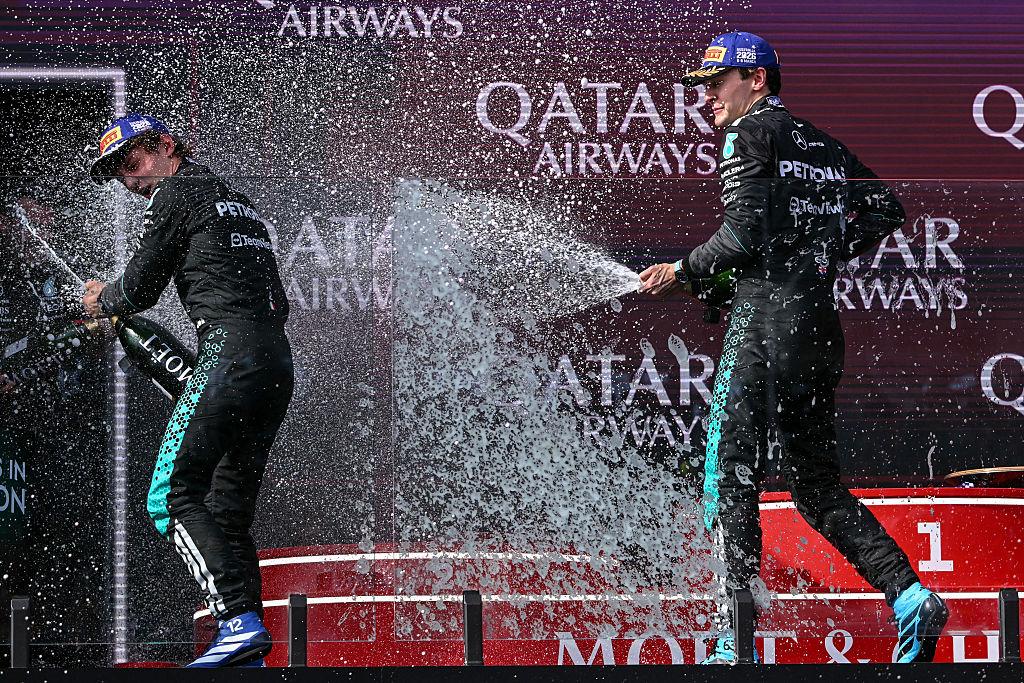
George Russell launched his Formula 1 title chase in style by winning the season opener Australian Grand Prix, leading Mercedes to an impressive one and two finish in Melbourne after an intense early battle with Ferrari’s Charles Leclerc.
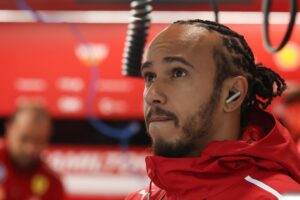
Russell crossed the line 2.9 seconds ahead of his team mate Kimi Antonelli and secured 25 points, Kimi Antonelli who recovered brilliantly after a difficult start claimed second place with 18 points. Ferrari’s Leclerc finished third with 15 points, while Lewis Hamilton came close to securing his first podium with Ferrari but ultimately had to settle for fourth.
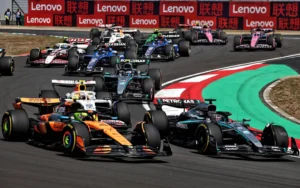
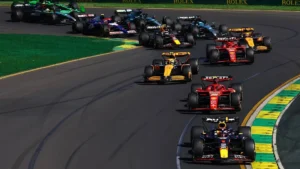
The race began dramatically as Ferrari demonstrated their strong starts off the line. Although Russell started from pole position, Leclerc quickly surged ahead into Turn One, while Hamilton also applied early pressure on the Mercedes driver. What followed was a thrilling duel between Russell and Leclerc, with the pair exchanging the lead multiple times during the opening laps.
Over the first nine laps, the two drivers repeatedly traded positions as they experimented with Formula 1’s new racing regulations and energy-deployment systems. The intense battle saw seven lead changes, creating an electrifying start to the new era of Formula 1 cars.
Leclerc managed to maintain the lead after the early exchanges, with Russell and Hamilton closely behind. However, the race took a decisive turn on lap 11 when Red Bull rookie Isack Hadjar stopped on track due to a technical failure, triggering a Virtual Safety Car (VSC).
Mercedes reacted quickly to the opportunity. Both Russell and Antonelli pitted during the VSC period, a move that proved crucial. Antonelli, who had dropped down the order earlier due to battery issues at the start, was able to rejoin the race in a stronger position.
Ferrari, however, chose not to pit either Leclerc or Hamilton during the VSC, instead keeping both drivers out on track. The team eventually brought Leclerc in on lap 25 and Hamilton on lap 28 under normal racing conditions, hoping their fresher tyres would give them an advantage later in the race.
Despite that strategy, Mercedes’ pace remained strong even on older tyres. Russell controlled the race confidently from the front, while Antonelli maintained second place to secure a dominant result for the Silver Arrows. By the finish, Leclerc had fallen 15 seconds behind Russell, though he narrowly held off Hamilton, who had closed the gap rapidly in the final laps.
“It was a good race,” Russell said after claiming the sixth victory of his Formula 1 career. “Today was more aligned with what we expected. We maybe had a tenth or two advantage but not the seven tenths we saw yesterday.”
Behind the leading teams, McLaren and Red Bull battled for fifth place. Reigning world champion Lando Norris ultimately finished ahead of Max Verstappen, who delivered a remarkable recovery drive after starting from 20th on the grid following a qualifying crash.
It was a disappointing race for McLaren’s Oscar Piastri. The Australian driver failed to start his home Grand Prix after crashing on the way to the grid, ending his weekend before the race had even begun.
Further down the field, Haas driver Oliver Bearman finished seventh, while 18-year-old debutant Arvid Lindblad impressed by securing eighth place for Racing Bulls. Audi’s Gabriel Bortoleto claimed ninth, with Alpine’s Pierre Gasly completing the top ten.
The race highlighted the challenges drivers face under Formula 1’s new regulations, which feature a 50-50 split between internal combustion and electrical power. Teams and drivers are still adapting to the complex systems, and the dramatic early battle between Russell and Leclerc showcased the tactical possibilities these changes have introduced.
While Ferrari defended their strategy decision after the race, insisting they had no regrets about not pitting under the VSC, Mercedes’ perfectly timed stop ultimately proved decisive.
With a dominant victory and maximum momentum, Russell has made an early statement in what promises to be an exciting Formula 1 season.