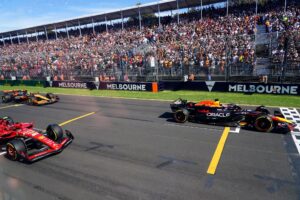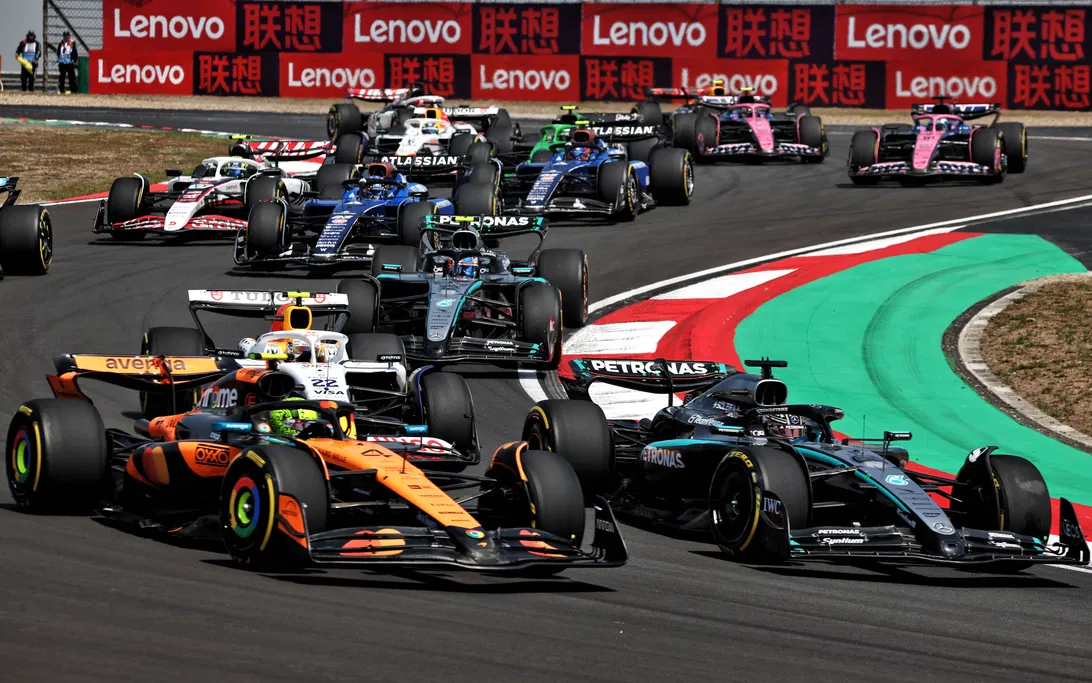
As Formula 1 enters the second round of the 2026 season, the Chinese Grand Prix promises to bring a completely different story compared to the season-opener in Australia. With the introduction of new rules and regulations for 2026, the Shanghai International Circuit presents a unique challenge for both drivers and teams, especially as the Sprint format makes its debut this weekend.
Unlike the Australian Grand Prix, which saw teams facing unpredictable energy management in a high-pressure, high-speed environment, the Chinese GP offers a different set of demands. The Sprint format, which features a single practice session before the competitive sessions, adds further complexity, leaving teams with less time to adapt their strategies.
One of the most significant contrasts between the two races is the circuit layout. Shanghai’s track is more similar to Bahrain, in that it is not as energy-starved as Albert Park. This means that the cars will have an easier time regenerating energy through braking zones, allowing drivers to manage their power units more naturally. The Shanghai International Circuit is known for its longer braking zones and fewer straights compared to the Australian track, which should help teams deploy energy in a more straightforward manner.
This shift in track characteristics plays into the hands of those teams and drivers who excel in energy-efficient racing. Ferrari’s Frederic Vasseur noted, “In terms of energy deployment, it’s almost the opposite of Australia,” emphasizing that China’s cooler conditions and different track layout make for a completely different challenge. Mercedes’ George Russell also weighed in, acknowledging that each race with the new regulations brings its own unique difficulties. “In Shanghai, we have one long straight, so most of the energy will be used there,” he explained. “You don’t need to divide it up like in Melbourne.”
For the drivers, this marks a steep learning curve as they continue to adjust to the complexities of the new era of F1. Kimi Antonelli, Russell’s teammate at Mercedes, described the Australian Grand Prix as “probably the hardest race to start the season,” due to the challenges of energy management on the circuit. However, with the unique characteristics of the Shanghai track, the energy deployment strategy should feel less chaotic, giving teams a clearer focus.
As the teams gear up for a Sprint weekend at the Chinese Grand Prix, it’s clear that no two races in this new era of F1 will be alike. The pressure to adapt quickly to these diverse track conditions will test the drivers and teams in ways they haven’t experienced before, making every race an exciting challenge.